
At last, here it is: the beef rendang recipe! The time has finally come!
Before moving to Thailand, I spent almost a year in Malaysia, tucked away on an island. As is often the case on tourist islands, the food was not particularly exciting, apart from grilled fish, roti canai—which I still dream about—M&M’s Peanut shakes and… beef rendang.
So, what exactly is it? Quite simply, the best beef curry of your life. Nothing more, nothing less.
Beef rendang is a rich, intensely aromatic curry, slowly simmered in coconut milk with galangal, lemongrass, tamarind and a generous blend of spices. One of its distinctive features is the addition of toasted grated coconut to the sauce. Extremely popular in both Malaysia and Indonesia, rendang comes in countless variations: some are drier, some spicier and others simmered for much longer, depending on the region and the cook.
A souvenir photo from Malaysia, ten years ago, when my colleague decided to prove to me
that it was possible to pick fresh coconuts—barefoot, with a machete between his teeth!
The little section of yellow wall in the photo was my bedroom, just above the dive centre:
a sea view every day and work at the bottom of the stairs… not too bad, right?

What You Need to Know About This Beef Rendang Recipe
To be completely honest, the Rendang dishes I ate in Malaysia did not come close to this one, for two very simple reasons:
- The beef was veeeeeery tough, which is quite common in Asia.
- The local restaurants almost certainly did not have time to pamper this curry and let it simmer slowly. They were most likely making a quicker version.
And yet, even with tough beef and less pronounced flavours, I absolutely loved them!
🌶️ Did you know?
Rendang has its roots in the Minangkabau cuisine of Sumatra, Indonesia. Through migration and cultural exchange, it spread widely across Southeast Asia and now holds an important place in Malaysian cuisine.
As is often the case with dishes passed down through generations, there is no single rendang recipe. Its preparation varies according to the region, family and cook. Some rendang dishes are almost dry and simmer for many hours, while others retain more sauce. The spices, level of heat and choice of meat can also vary from one version to another.
This wonderful recipe comes from Bee at Rasa Malaysia with only a few very minor changes. My only slight reservation is that the spices are used whole rather than ground, so you end up with pieces of spice on your plate and have to take the time to remove them.
As for Nan, he gave it 9 out of 10! Only because, and I quote:“If the cook had been younger and prettier, I would have given it a 10.”Classy and refined, as always!
You might say that we could simply toast the spices and grind them before adding them to the dish. The problem is that the balance of flavours in this recipe is absolutely perfect. I worry that grinding the cinnamon, cardamom and star anise would make their flavours much stronger and upset the balance of the curry.
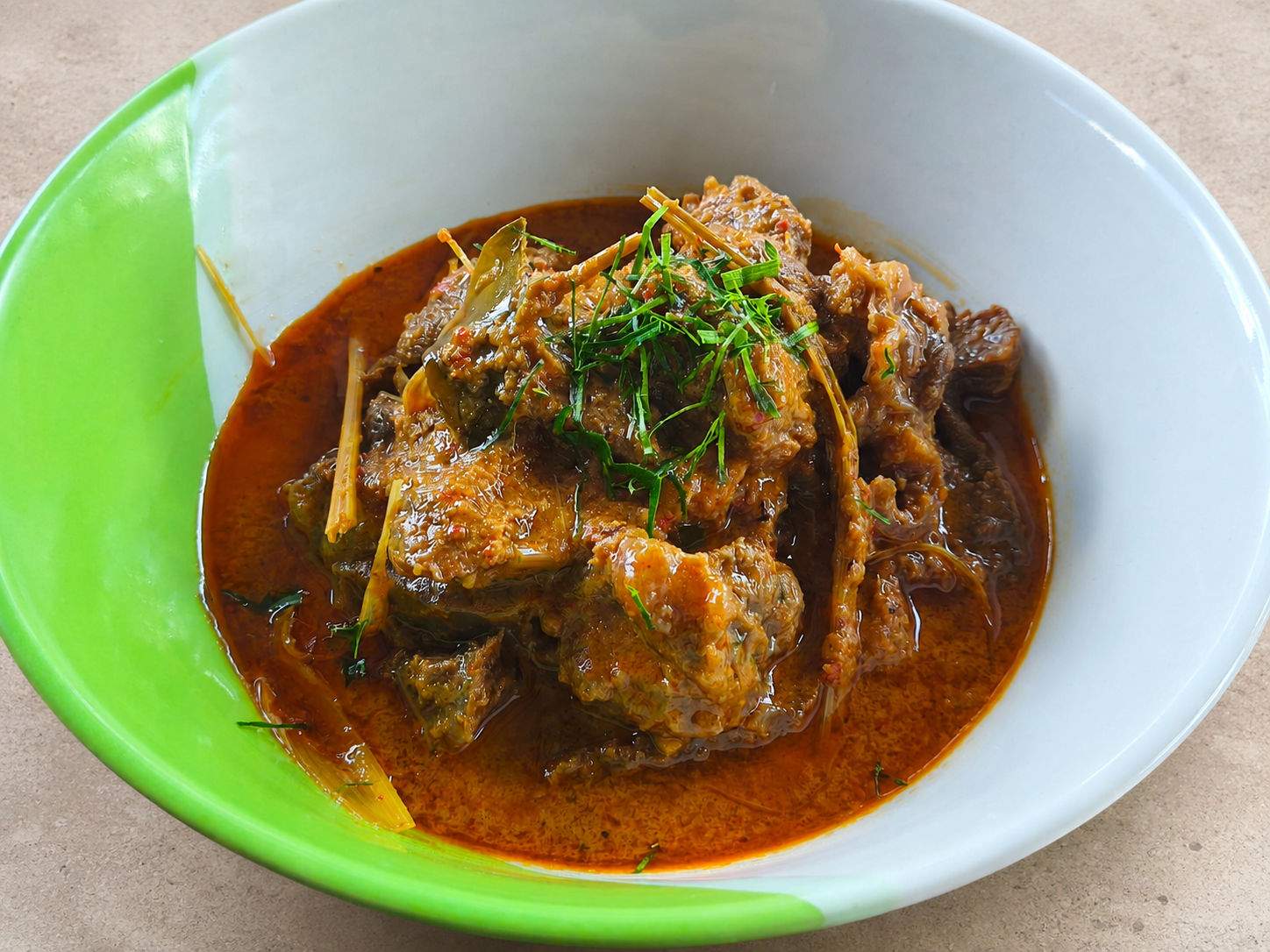
Nothing to Do with the Recipe, but Never Mind
Now for the bad news: my camera has died. The humid climate is not kind to electronics, and it is even worse for optical equipment. Fungus grows between the lenses of cameras, binoculars and video projectors, making them unusable after only one or two years. I had a beautiful DSLR with a macro lens that had cost me a fortune. It is now impossible to use because fungus has developed inside it. I can no longer focus properly because the lens is dirty on the inside. The lenses have to be sent to the brand’s official representative to be dismantled and cleaned, which costs CHF 250 to 300 each time… and has to be done every year!
So, reluctantly, I gave up my DSLR and invested in a compact camera with interchangeable lenses, without even considering that exactly the same thing might happen to those tiny lenses too!
If you ever feel like moving to a tropical country, remember to budget for regularly replacing your electronic equipment… or plan on buying a dry cabinet for your camera gear! Yes, they really do exist! Just like cigar humidors and wine cellars, you can buy airtight cabinets with controlled humidity to protect photographic equipment. Crazy, isn’t it?
Anyway, all this rambling is simply to tell you that the photos are not great, and I am sorry. I have not yet mastered taking photos with my phone.
Which Cut of Beef Should You Use for Rendang?
Choose a cut suited to stewing, such as leg, shoulder, blade or cheek. Any slow-cooking cut of beef is perfect for rendang.
I cannot really tell you exactly which cut to choose because, here, you simply take whatever is available—whatever the market seller feels like giving you. Every part of the cow is cut in rather unusual ways and sold at the same price: 180 baht per kilo, or around CHF 6.
You can also prepare this curry with lamb or goat.
Ingredients for This Beef Rendang Recipe
The Magic Ingredient…
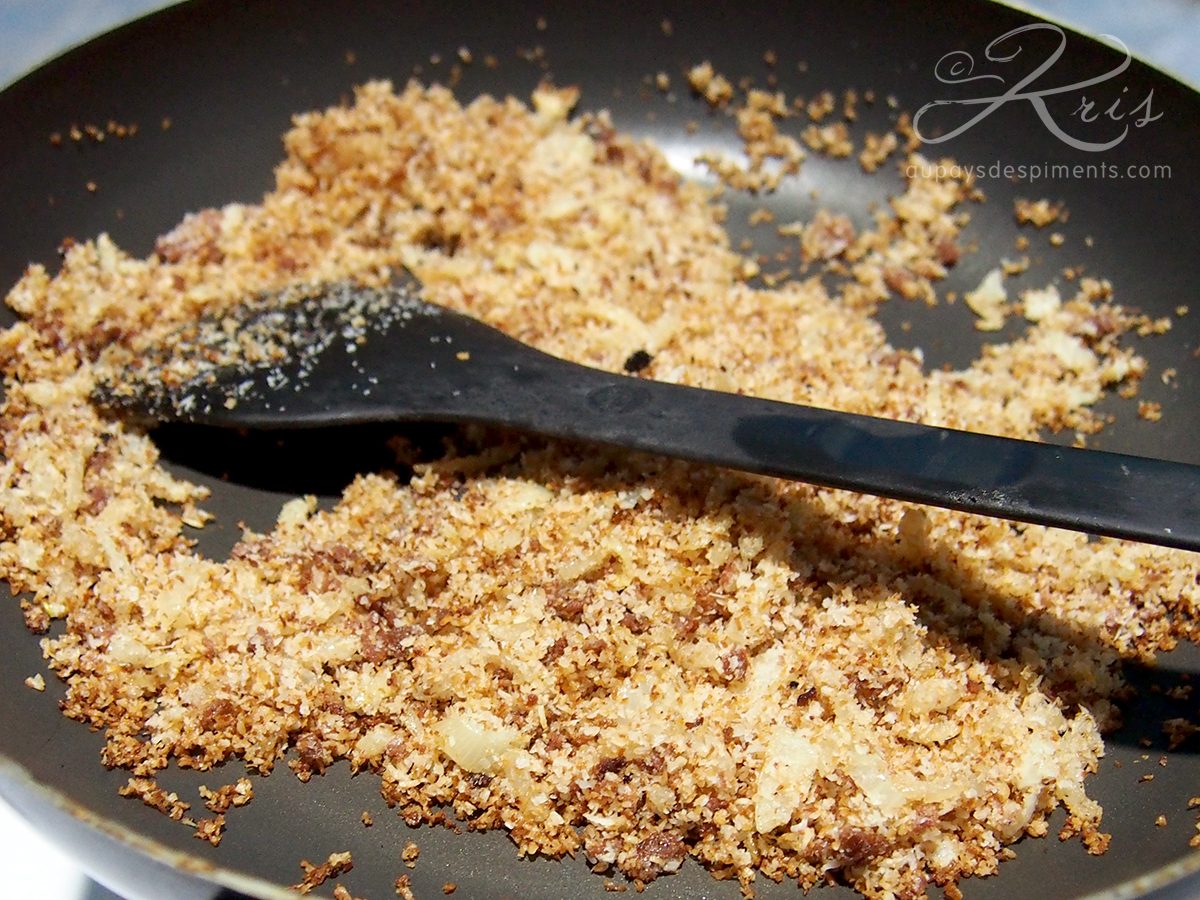
It is toasted coconut! It is ESSENTIAL if you want this dish to be truly successful. To prepare it, place dried grated coconut in a dry frying pan over medium-low heat. Stir constantly until it turns a beautiful amber colour. Transfer it to a mortar and pound it briefly to intensify its aroma. Pounding releases the coconut’s natural oils and gives it an incredible fragrance.
Fresh galangal
You really must use fresh galangal rather than galangal powder. It cannot be replaced with ginger, as the flavour is completely different.
Dried Chillies
Choose mild or only slightly spicy dried chillies. This is important. You need a generous quantity of dried chillies to give the curry paste body. If they are too hot, the dish will become excessively spicy after simmering for so long.

Tamarind
For this recipe, I strongly recommend finding good-quality tamarind pulp and making the tamarind extract yourself by diluting it in a little hot water, as explained here.

IMPORTANT NOTE: Like all slow-cooked dishes, rendang tastes even better the next day. It is therefore worth making a large batch and reheating it. It is so addictive that you will happily eat it for several days in a row! It also freezes extremely well.
💡 Sauce or No Sauce?
This curry is often served very dry, with very little liquid left in the sauce. Personally, I like to keep a little sauce to spoon over the rice… or to dip a piece of bread into.
It is entirely up to you whether you want to reduce the sauce further.
How to Thicken Beef Rendang
If the sauce is still too thin but the meat is already perfectly cooked and tender, the best solution is to remove the beef from the pan. Leave the sauce to reduce over medium heat, watching it carefully, then return the meat to the pan and mix everything together.
Frequently Asked Questions About Beef Rendang
Beef rendang is a richly spiced, slow-cooked dish made with coconut milk, galangal, lemongrass, tamarind and chillies. As it cooks, the liquid gradually reduces and the flavours concentrate around the meat, which becomes exceptionally tender and aromatic.
Not necessarily. In this recipe, I use mild dried chillies, which give the curry paste colour, flavour and body without making the dish excessively hot. It is important to choose mild chillies because their flavour and heat intensify during the long cooking process.
Yes, and I highly recommend it. Like many slow-cooked dishes, beef rendang tastes even better the next day. The meat absorbs more of the spices and the flavours become deeper and richer. Reheat it gently, adding a small amount of water if the sauce has thickened too much.
Beef rendang is traditionally served with rice, which is the perfect accompaniment to its rich, spicy sauce. You can choose jasmine rice, another fragrant rice or basmati rice, and add a few slices of cucumber for a touch of freshness.
Yes, beef rendang freezes very well. Leave it to cool completely before transferring it to an airtight container. Allow it to thaw in the refrigerator, then reheat it slowly over low heat, adding a little water if necessary.
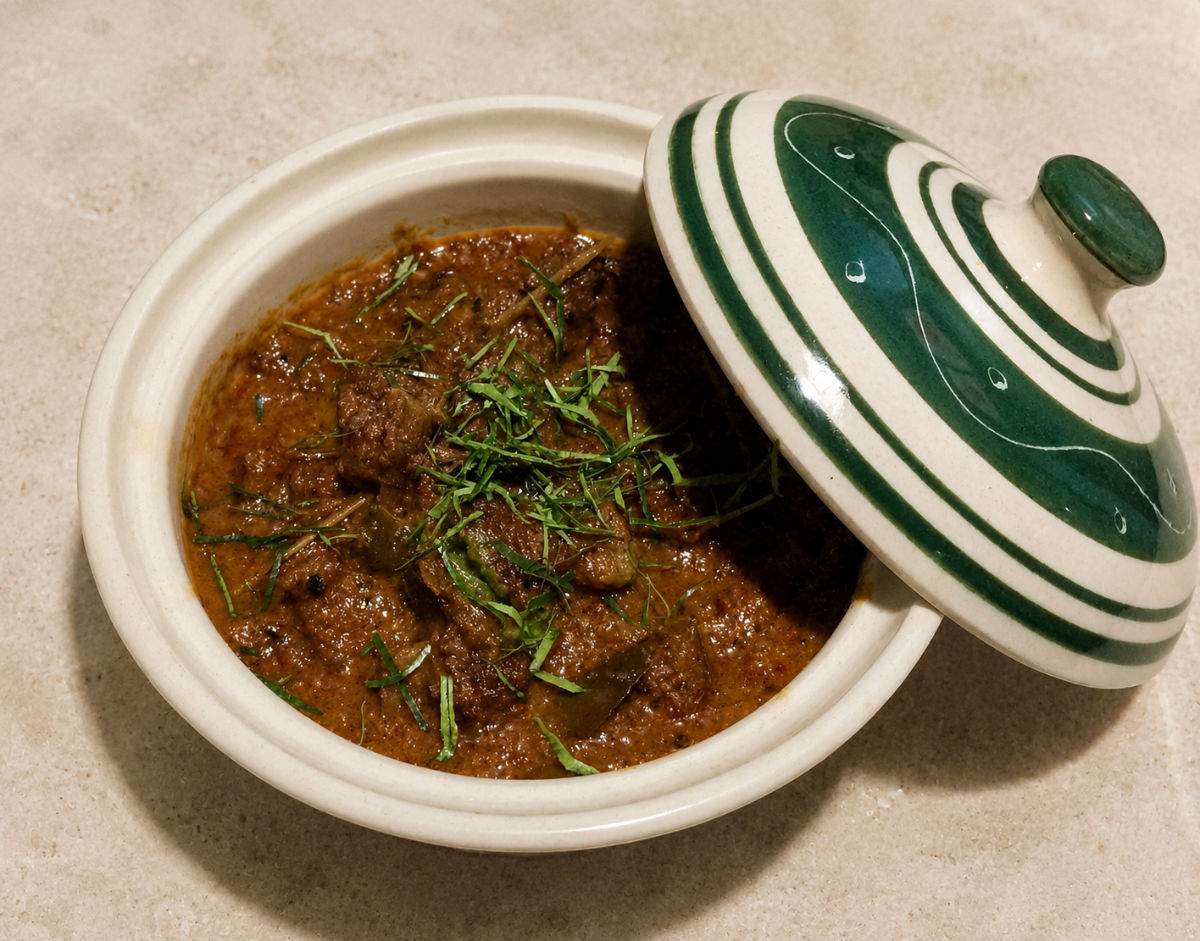
The Best Beef Rendang Recipe
Ingredients
For the Beef and Marinade
- 600 grams stewing beef, cut into 2 cm cubes
- 1 tsp of salt
- 1,5 tbsp tamarind extract taken from the tamarind mixture prepared below
- 6 tbsp toasted grated coconut
For the Rendang Curry Paste
- 5 shallots
- 3-4 cm of galangal fresh
- 3 stalks of lemongrass white parts only
- 3 cm of ginger fresh
- 5 large cloves of garlic
- 10-12 mild dried chillies
For the Spice Mixture
- 1 piece cassia cinnamon approximately 4 cm long
- 3 cloves
- 3 star anise
- 3 white cardamom pods
- 2 stalks of lemongrass crushed
- 8 kaffir lime leaves torn
For Simmering
- 2 tsp tamarind pulp diluted in 100 ml hot water
seeds removed
- 250 ml of coconut milk
- 100 ml of water
- 2 tbsp of palm sugar or to taste
- salt
Instructions
Marinate the Beef
- Combine the beef with the salt, tamarind extract and toasted coconut. Leave it to marinate while you prepare the remaining ingredients.

Prepare the Rendang Curry Paste
- Soak the dried chillies in hot water for 15 minutes.
- Meanwhile, roughly chop the shallots and garlic, finely slice the lemongrass, and cut the galangal and ginger into small pieces.
- Drain the chillies, then remove the stems and seeds. Roughly chop them.
- Place all the prepared ingredients in a blender or mortar and process or pound them into a fine paste.

Cooking:
- Heat 2 tablespoons of oil in a large saucepan or Dutch oven. Add the curry paste, cassia cinnamon, star anise, cloves and cardamom, then fry over high heat, stirring regularly.
- Add the beef and crushed lemongrass, then brown for 1 minute.
- Add the coconut milk, tamarind mixture and water. Simmer over medium heat until the meat appears cooked, stirring regularly to prevent it from sticking.
- Add the palm sugar and kaffir lime leaves, each torn into four pieces.
- Cover and simmer over very low heat for 1 to 1½ hours, until the beef is tender and the sauce is thick.
- Adjust the seasoning with salt and sugar. The curry should be aromatic with a very subtle tanginess, but it should not taste overly sour.
- You may need to add a little water during cooking if the curry becomes too dry or the sauce thickens too much. Keep a close eye on it while it simmers… I trust you!
Notes
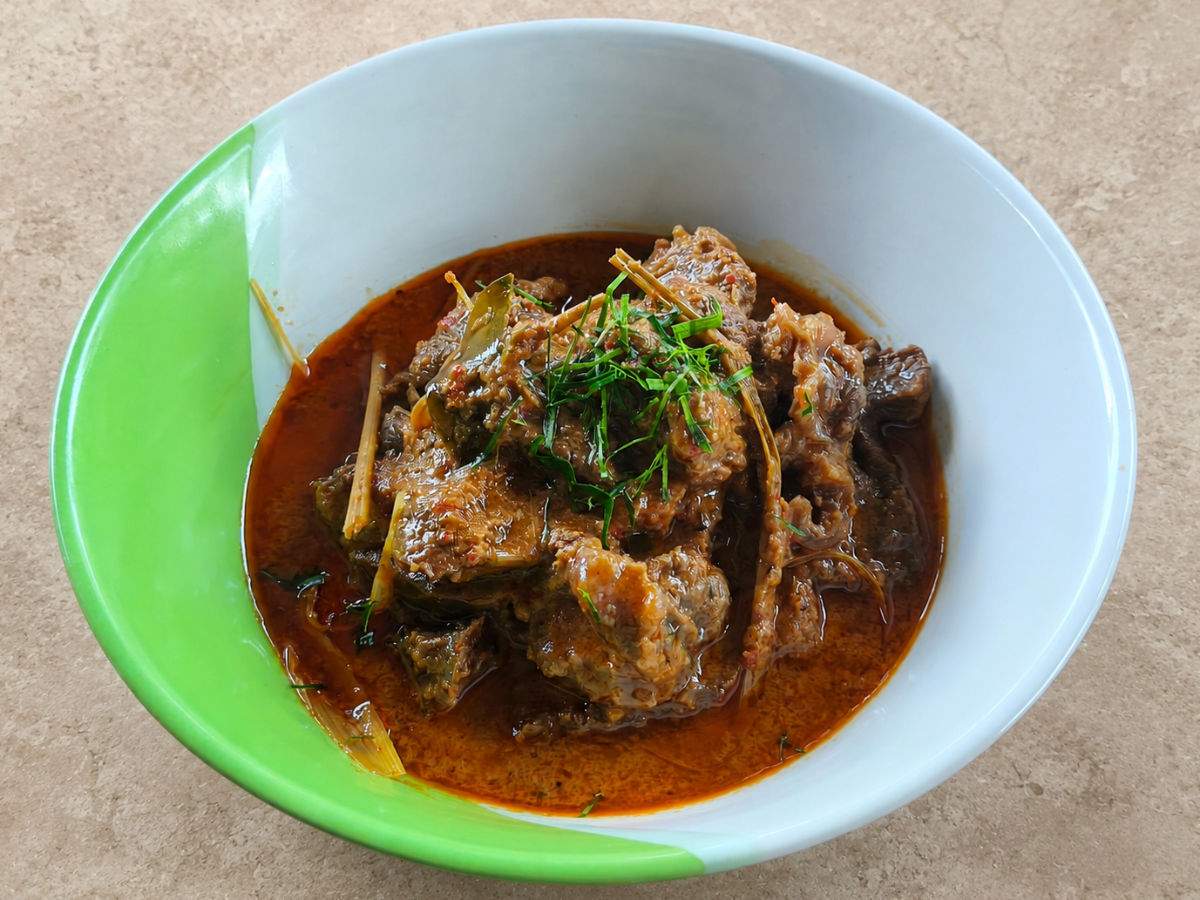
 English
 Français
Je reviens pour la énième fois sur ce site, après avoir goûté celui de ma copine du coin Thaïlandaise, j’avais fait un essai avec un pot métal de chez Terre exotique (il manque des ingrédients mais c’est trop mal en ajoutant le reste), c’était pas aussi bon que le sien ! Du coup je m’y suis mise aussi et j’ai vu qu’elle aussi fait ce curry avec du filet mignon. Je coupe assez fin, genre 7/8 mm d’épaisseur. C’est une tuerie, ce curry, c’est définitivement mon préféré ! J’ai maintenant au congélo en stock tj galanga et citronnelle, j’adore (notamment aussi dans la soupe de rue Thaï, au poulet ou aux crevettes, que j’aime bien faire à la maison). Il fallait que je rende justiceà ce site qui m’a bien aidée avec les bonnes précisions. Donc je voulais rendre à César… encore merci ! Tardif, vu que ça doit faire 2/3 ans que j’utilise cette recette. Bref, je vous conseille la version au filet mignon, ça marche super bien et validé par la copine Thaï !
J’adore le beef rendang et ta recette m’a l’air super géniale. Je vais l’essayer a la première occasion
C’est un peu de travail de préparation mais ça en vaut très largement la peine!
C’est une pépite! Je devrais pouvoir tester cette recette rapidement, d’abord parce que là, je bave et qu’ensuite j’ai tous les ingrédients, hormis le boeuf (noté dans la liste de course de la semaine, hihi!)
Merci Kris! Bises
Coucou Cécile,
J’ai vraiment pensé à toi en écrivant cette recette, je savais qu’elle te plairait.
Dis-moi si elle est à la hauteur de tes espérances 😉
Becs
Kris