
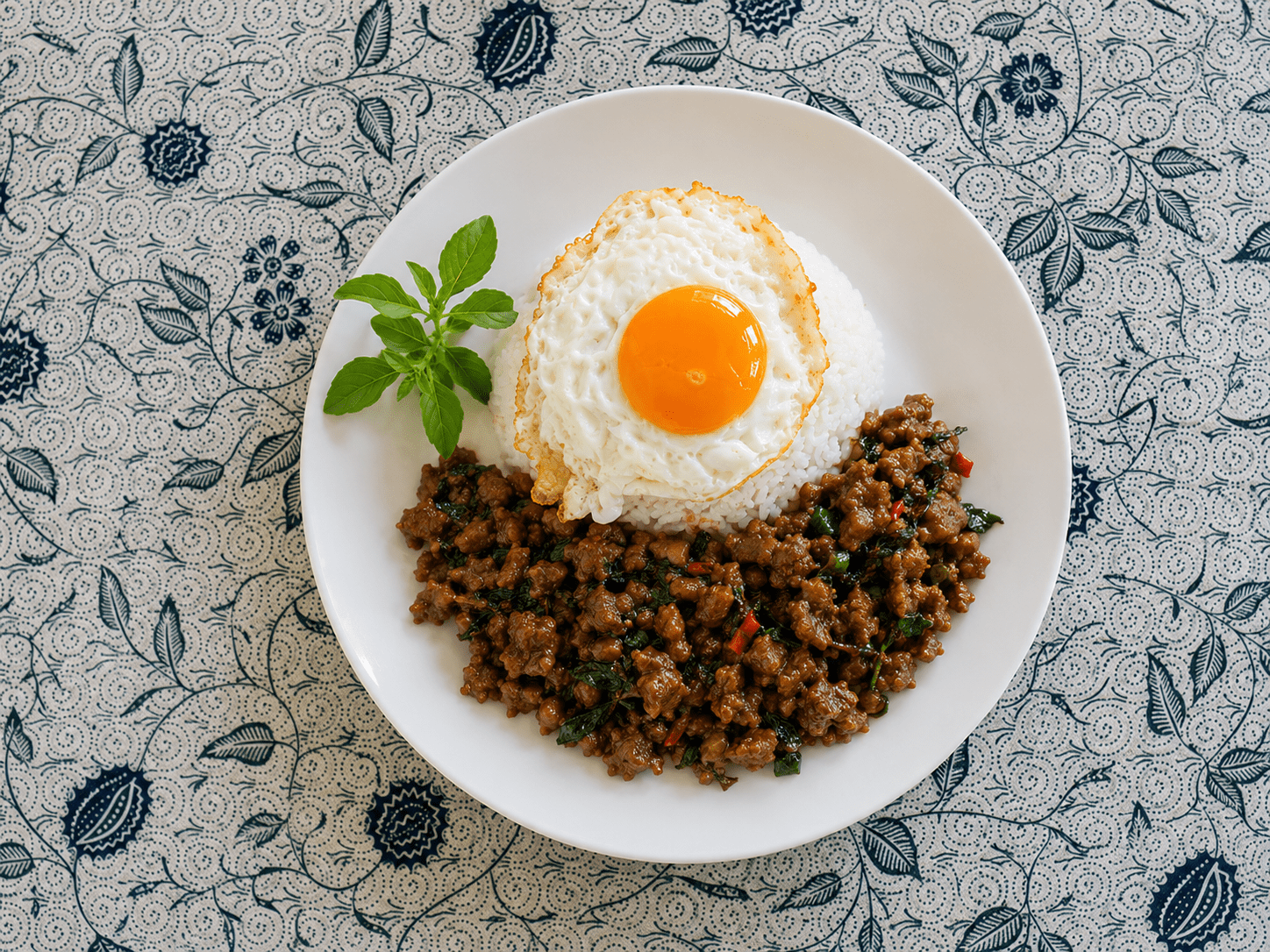
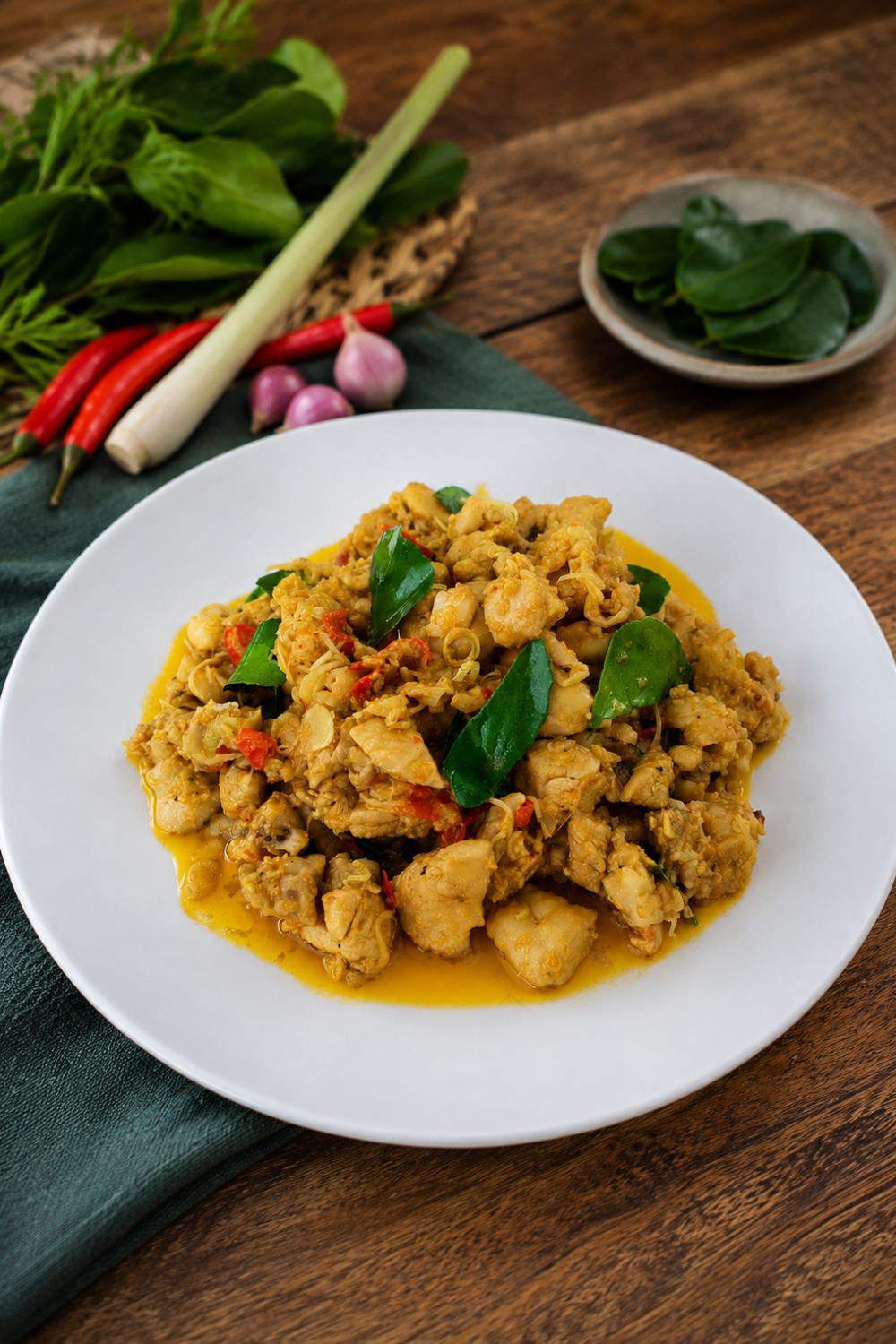
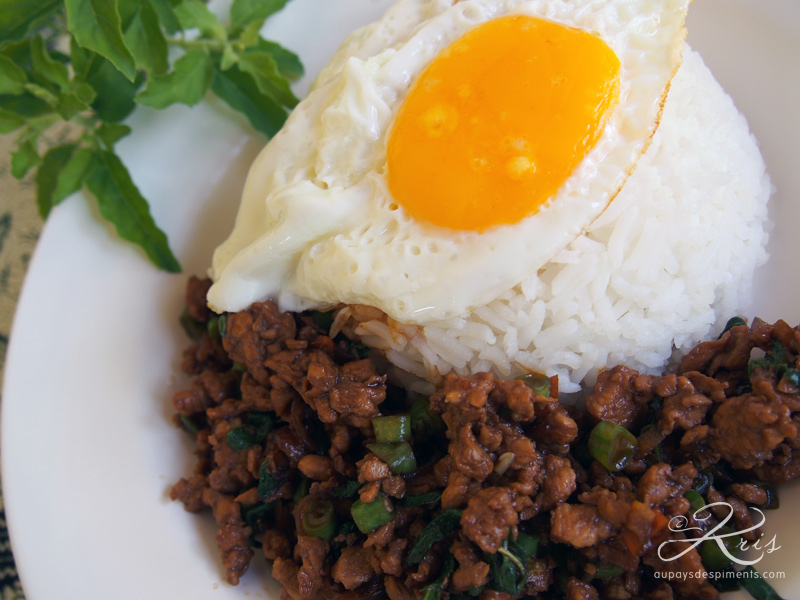
Le Chicken Pad Kaprao, or Pad Kaprao Gaiis one of Thailand’s most popular dishes. This quick stir-fry combines finely chopped chicken, garlic, chillies and holy basil in a savoury, slightly sweet and wonderfully aromatic sauce. It is usually served with jasmine rice and a fried egg with crispy edges. In Thailand, it is the dish people order when they want a quick meal at any time of day. Easy to make at home, this Pad Kaprao recipe is ready in around 15 minutes.
🌿 Good to know
Pad Kaprao is not made with the sweet Thai basil commonly used in curries. Its defining ingredient is holy basil, known as kaprao in Thai. The two varieties have very different flavours.
Aujourd’hui, c’est au milieu des cartons et des valises que j’écris cette recette de holy basil chicken stir-fryrecipe surrounded by boxes and suitcases. Just three days to go before I leave my island for good.
Je dois avouer, aussi étrange que cela puisse paraître, qu’elle ne va pas me manquer tout de suite. 6 ans passés sur une petite île paradisiaque et je me réjouis de revenir à un semblant de civilisation. Cette civilisation n’est en rien comparable à ce que tu vis en Europe. Mais c’est mieux que rien du tout !
En prime, je vais enfin avoir le temps de ne rien faire d’autre que de lire tous ces livres qui me font de l’oeil depuis déjà une année ! Un canapé, un thé, et du temps… Woauahhhhhhhhh !
So here is a quick and easy recipe, for those " no time to cook, but still want something delicious« . Recette de poulet, bien sûr, puisque sur mon île, on n’y trouve pas grand chose d’autre !! Basilic du jardin, haricots verts, piments, ail… Et le tour est joué.
✨ Last updated: July 2026
This recipe, first published in 2013, has been updated with additional information about Pad Kaprao, holy basil, and the different ways to prepare this classic Thai dish. The recipe itself remains the one I have been cooking in Thailand for many years.
What Is Pad Kaprao?
Pad Kaprao is a Thai stir-fry made with meat, garlic, chillies, and holy basil. The word pad means “stir-fried,” while kaprao refers to holy basil. When made with chicken, the dish is called Pad Kaprao Gai.
Extremely popular at street-food stalls and small local eateries throughout Thailand, it is usually cooked to order in a very hot wok. It is served over rice, often topped with a Thai-style fried egg known as khai dao. It is the kind of dish people order in Thailand when they are hungry, in a hurry, and want something they know will be delicious.
Pad Kaprao can also be made with minced pork, beef, prawns, squid, or tofu.
Pad Kaprao or Pad Krapao?
The spellings Pad Krapao or Pad Kra Pao are often found on Western websites and restaurant menus. They mainly result from English-language transliterations and do not accurately reflect the Thai pronunciation.
The Thai name ผัดกะเพรา is pronounced approximately “Pad Ka-prao”. The word pad means “stir-fried in a wok,” while kaprao refers to the holy basil that gives the dish its name. I therefore use the spelling Pad Kapraohere, as it is closer to the Thai pronunciation.
Holy Basil and Thai Basil: What’s the Difference?
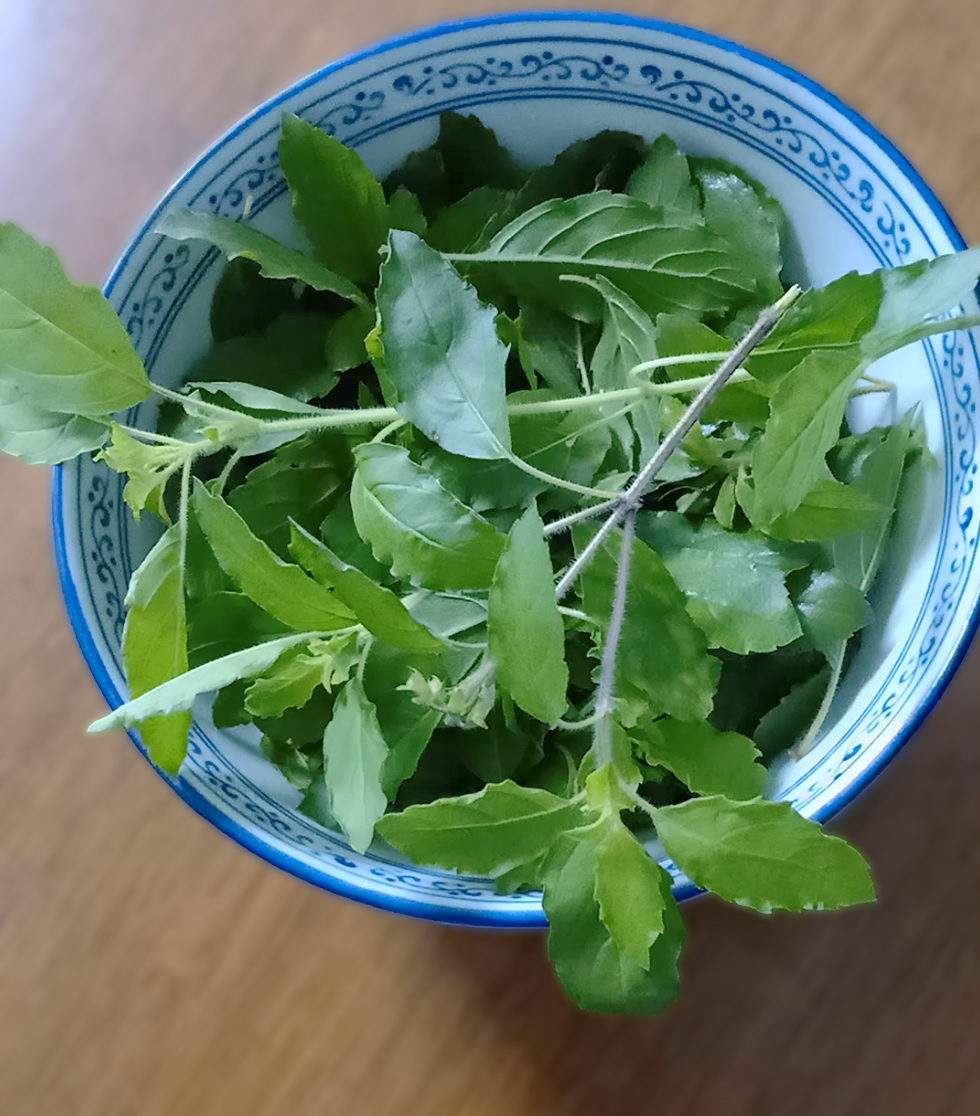
Holy basil, known as kaprao in Thailand, is the ingredient that gives the dish its name and distinctive flavour. Its leaves have a slightly peppery taste and are far less aniseed-like than those of Thai sweet basil.
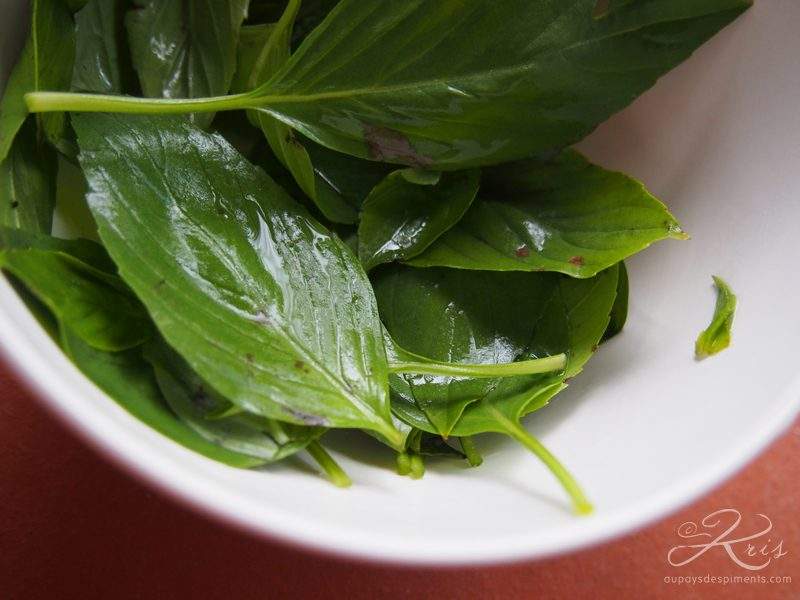
Thai sweet basil, or horapha, often has purplish stems and a more pronounced aniseed flavour. It is commonly used in dishes such as green curry, but it does not produce the same result in Pad Kaprao.
Outside Thailand, holy basil can be a little harder to find in Asian grocery stores than Thai sweet basil, but it is worth seeking out. Alternatively, you can grow some in your garden and save yourself the trouble! Here in Thailand, it grows by itself almost everywhere. If you cannot find any, you can use another type of basil, but the dish will have a different flavour.
Good to Know
“Thai basil” is a generic term often used to refer to several different varieties. To make Pad Kaprao with its characteristic flavour, look for holy basil, which may also be sold as tulsi or kaprao.
D’autres recettes ultra rapides et délicieuses
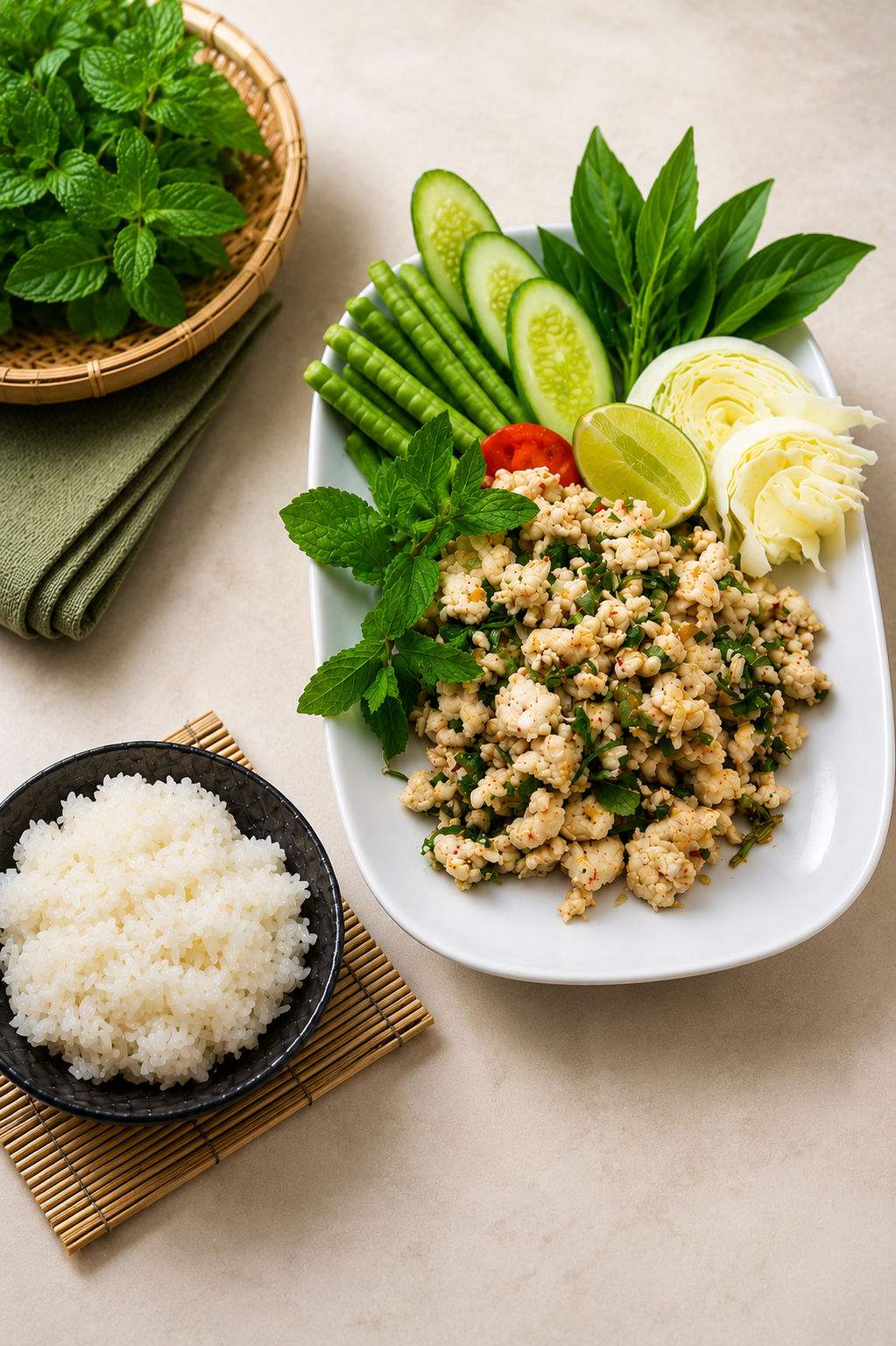
Ingredients for Chicken Pad Kaprao
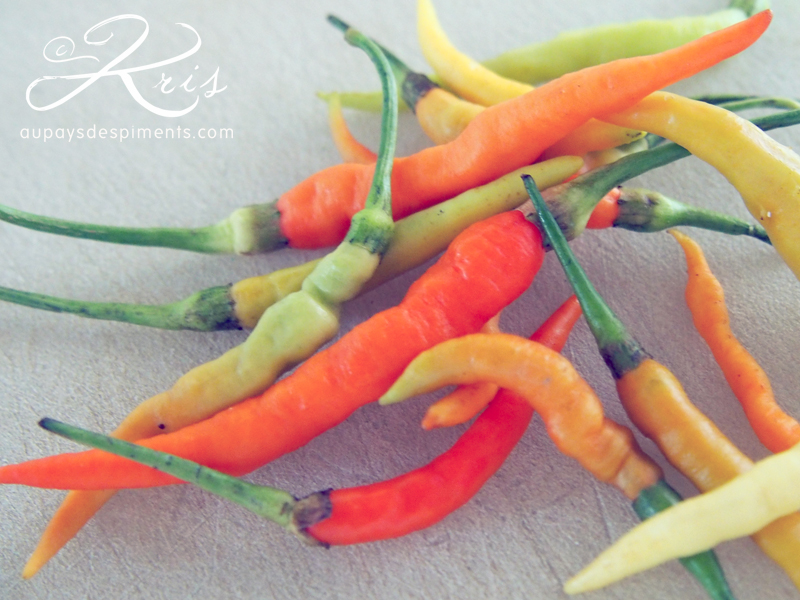
Chillies: comme d’hab, la quantité of chillies you add depends on your tolerance for spicy food. You can use bird’s eye chillies, long mild chillies, or leave them out altogether. Pad Kaprao served in Thailand is usually very spicy.
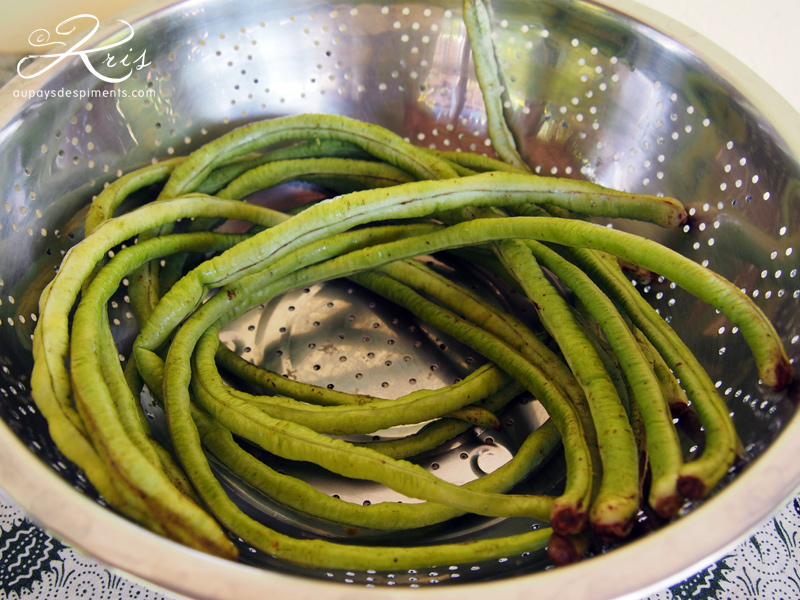
Yardlong beans: In Thailand, we use long beans, also known as yardlong beans. You can easily replace them with regular green beans. In my version, they add crunch and colour to the dish.
Chicken: Comme je ne trouve pas de viande déjà hachée, et que je n’ai pas de hachoir, je le fais tranquilou au couteau. Assise par-terre avec une planche à découper bien solide, un gros couteau bien affûté, je tape sur les filets de poulet pour les hachouiller tout fin. Et si tu fais pareil et que tu ne veux pas que tes voisins du dessous te détestent, place un torchon sous la planche pour atténuer le bruit. 😆
Finely chopping the chicken with a knife gives it a much more pleasant texture than grinding it into a paste. Chicken thighs will be juicier, but chicken breast works well too.
You can also prepare this recipe with pork, beef, tofu, or prawns..
My version also contains a few yardlong beans and shallots. There are many variations of Pad Kaprao in Thailand: some are very simple, while others include a few vegetables.
La sauce soja foncée et la sauce d’huître se trouvent facilement dans les épiceries asiatiques. Pour en savoir plus, consulte ma page consacrée aux the essential ingredients used in Thai cooking..
My Tips for Making Pad Kaprao
Prepare all the ingredients before turning on the heat. The dish cooks very quickly, so there will be no time to chop vegetables once you start.
Heat the wok or frying pan before adding the chicken. The meat should sear over high heat rather than simmer in a large amount of liquid.
Add the holy basil at the very end. It only needs to wilt in the heat, as cooking it for too long will cause it to lose its aroma.
Nous aimons ce plat avec une grande quantité de basilic sacré. Celui de notre jardin est très parfumé. Si tu utilises du basilic sacré acheté en magasin, n’hésite pas à en mettre davantage.
🍽️ What to Serve with Pad Kaprao
In Thailand, Pad Kaprao is served with jasmine rice and very often topped with a fried egg. A Thai-style fried egg, or khai dao, is cooked in a generous amount of oil, giving it crispy edges while the yolk remains runny. The rice helps balance the heat of the chillies and absorbs the sauce. You do not need many additional side dishes to make this a complete meal.
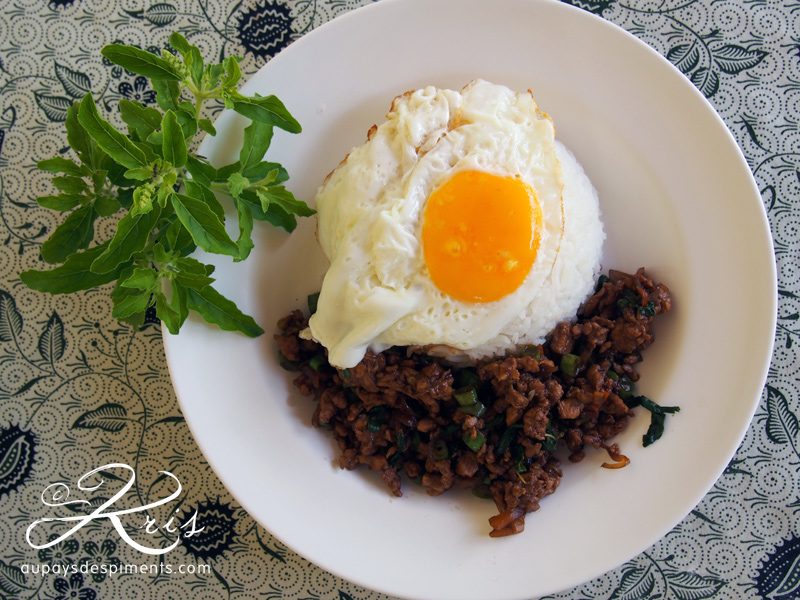
Chicken Pad Kaprao with Holy Basil
Ingredients
- 400 g minced chicken thighs or chicken breast
- 5 cloves of garlic
- 3 bird chillies or more... or fewer
- 1 cup holy basil leaves
- 3 shallots
- 4 yardlong beans, or regular green beans
- Oil for cooking
Sauce:
- 1 tsp of palm sugar
- 2 tbsp of soy sauce
- 3 tbsp of oyster sauce
- 1 tsp of dark soy sauce
- 1 tsp of fish sauce
- 5 tbsp of water
To serve:
- Jasmine rice
- Fried eggs
Instructions
Hold on tight—here we go!
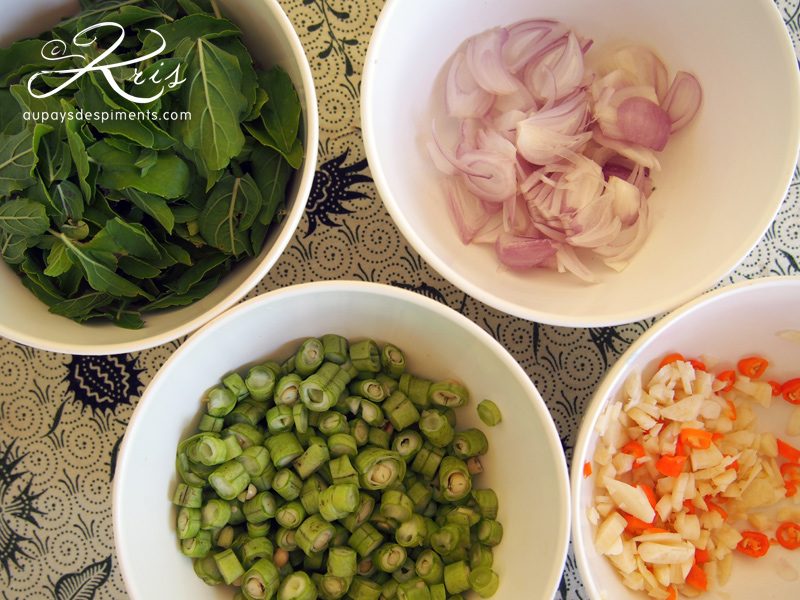
- Crush the garlic cloves, remove the skins, and chop them finely.
- Finely slice the chillies.
- Wash the holy basil and pick the leaves from the stems.
- Cut the beans into 5 mm pieces.
- Peel and finely slice the shallots.
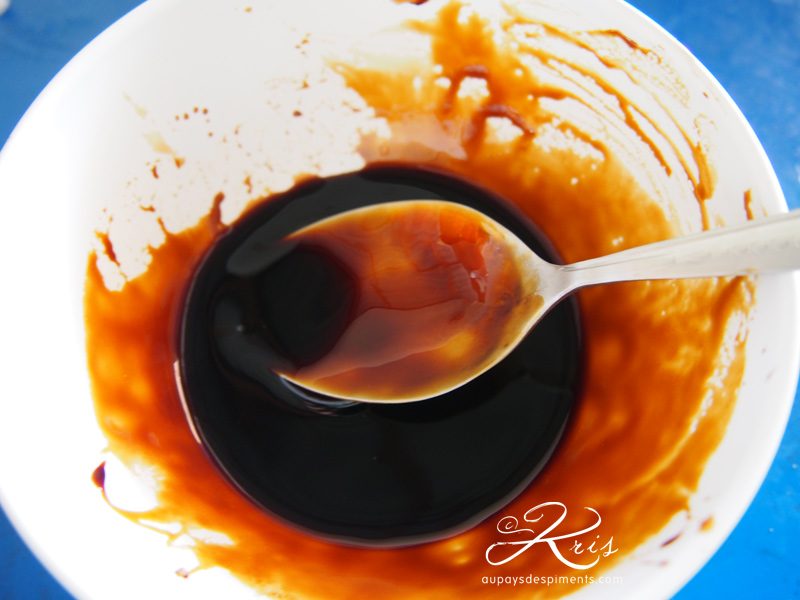
- In a bowl, combine all the sauce ingredients.
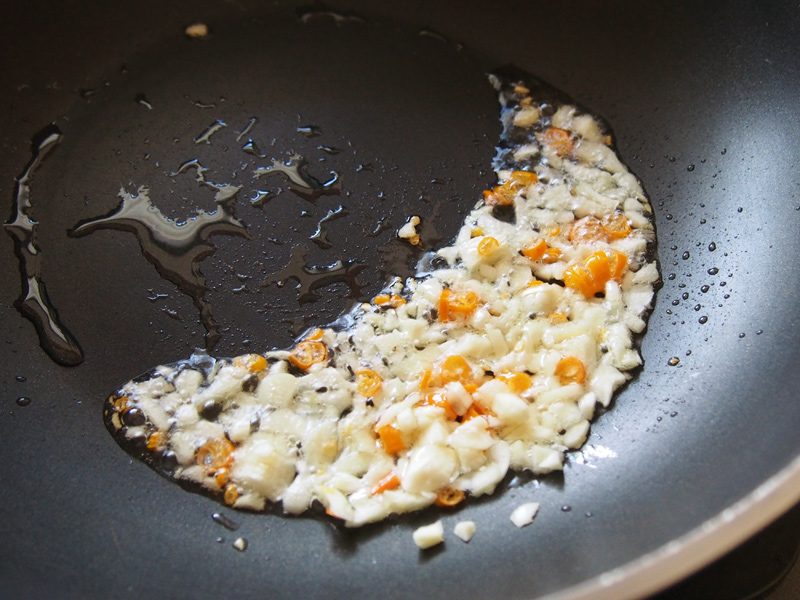
- Heat the oil in a wok or frying pan, then sauté the garlic and chillies. Hehehe… this usually makes everyone cough!
- Add the chicken and stir-fry over high heat. When it starts to turn white, add the sauce and shallots.
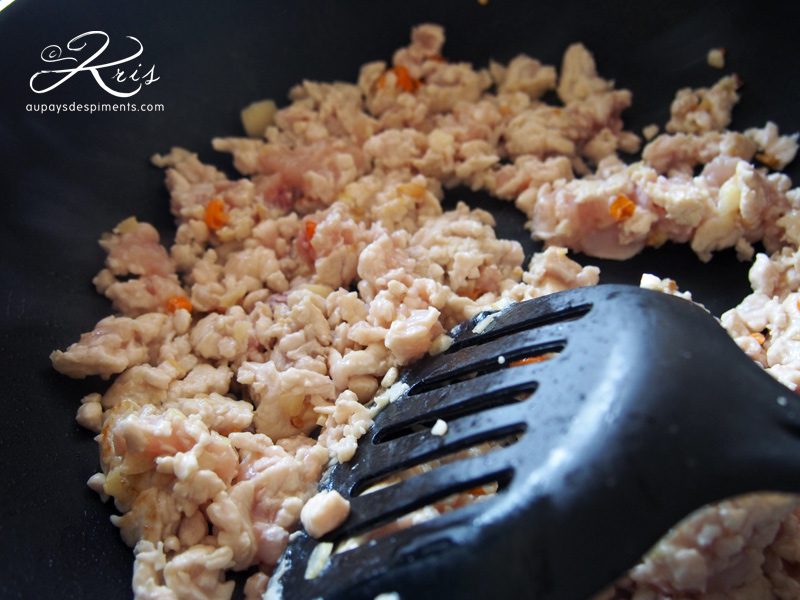
- Reduce the heat slightly and mix everything thoroughly. The sauce will give the chicken a lovely brown colour and a slightly sweet flavour.
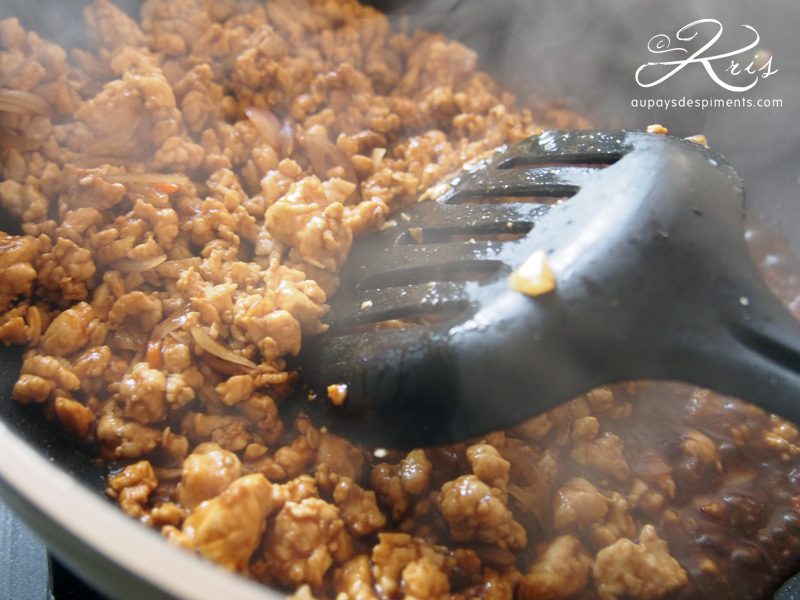
- Continue stirring until the chicken is fully cooked.
- Add the holy basil and beans, cook for another 30 seconds, then remove from the heat.
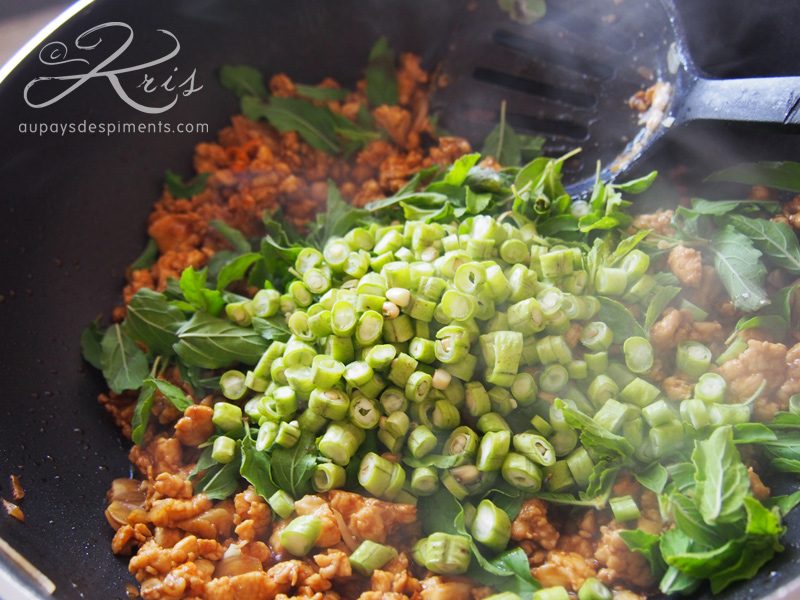
- Fry the eggs and serve them with the Pad Kaprao and jasmine rice.
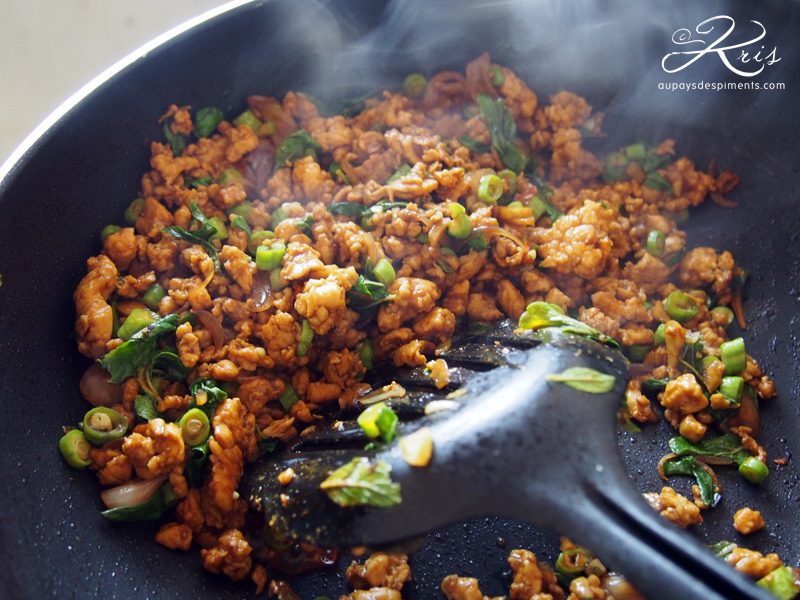
- And that’s it—all that’s left to do is eat!
Notes
Frequently Asked Questions About Pad Kaprao
Traditionally, Pad Kaprao is very spicy, but you can reduce the amount of chilli without changing the rest of the recipe.
Thai basil can be used as a substitute, but its aniseed flavour is very different. The dish will still taste good, but it will not have the characteristic flavour of Pad Kaprao.
Fresh or frozen holy basil is available in some Asian grocery stores. It may be sold as holy basil, tulsi or kaprao.
Il est meilleur immédiatement après la cuisson. Mais il est possible de le préparer à l’avance ou même de le congeler.
Gai means chicken, while moo means pork. The cooking method and seasoning are similar.
 English
  Français
Chère Kris,
j’aimerais réaliser cette recette, et j’ai bien compris qu’il ne fallait absolument pas mettre de basilic thaï ! Malheureusement, c’est tout ce qu’on trouve ici en France. Par contre, je n’ai pas encore été voir à Paris (Frère Tang/Paris Store); il y a peut-être une chance d’en trouver là-bas. Par quoi le remplacer sinon? ou ne rien mettre du tout…?
Bonjour Lili,
On ne peut pas remplacer le basilic sacré si on souhaite obtenir le goût original de ce plat. Par contre, tu peux utiliser le basilic doux, ce sera bon aussi mais très différent.
Est-ce que tu as fini par trouver du basilic sacré?
Ta recette déchire, un grand merci !!!
J’ai bossé 1 an en Thaïlande et je dois dire que ce soir j’ai retrouvé les saveurs 😉
Wow, merci 🙂
J’espère que tu trouveras ton bonheur ici 😉
A tout bientôt et bon appétit !
Kris
Salut Kris! Tu reviens en France alors???? Très jolie recette ! Welcome!
Coucou,
En fait non, j’ai juste déménagé : j’ai passé d’une petite île à une petite ville 🙂 mais toujours en Thaïlande.
Becs
Kris
Ayant ,pour la première fois trouvé du basilic thaï, ( mais non sacré),.je me suis empressée de faire ta recette.
C’était bon mais trop de ce parfum.
Je débute dans cette gastronomie, et m’accroche à toi, telle la sangsue . MERCI au hasard ,de m’avoir fait découvrir ton magnifique blog, pour me permettre d’apprendre.
. Je te lis avec beaucoup d’attention……………….Mon âge m’autorise à te faire 2 gros bizouxes,
AS-tu des bébinous????
Bien amicalement, de la Côte d’Azur Chris 06
Hello Chris de la Côte d’Azur,
Le basilic thaï ou basilic doux a effectivement un goût très (trop fort). Je dois dire que je ne l’utilise pas souvent. J’ai essayé de remplacer le basilic européen dans les salades avec celui-ci… ça ne me plait pas.
Ils est, par contre, absolument délicieux dans un curry vert.
Pour le poulet sauté au basilic, il faut vraiment du basilic sacré, il a un goût discret particulier qui ne peut pas être remplacé.
N’hésites pas à poser toutes les questions que tu veux et à continuer à t’accrocher 🙂 c’est avec plaisir que j’y réponds.